Wake Forest, NC · Garage Door Service
Garage Doors on Older Wake Forest Homes: No Insulation Core, No Thermal Break
Wake Forest homes built mostly in the 1980s and 90s often have garage doors with no insulation core. Here's what that means for cold air, condensation, and repairs.
- Repairs & new doors
- Springs & openers
- Serving 4 nearby communities
What Local Conditions Do
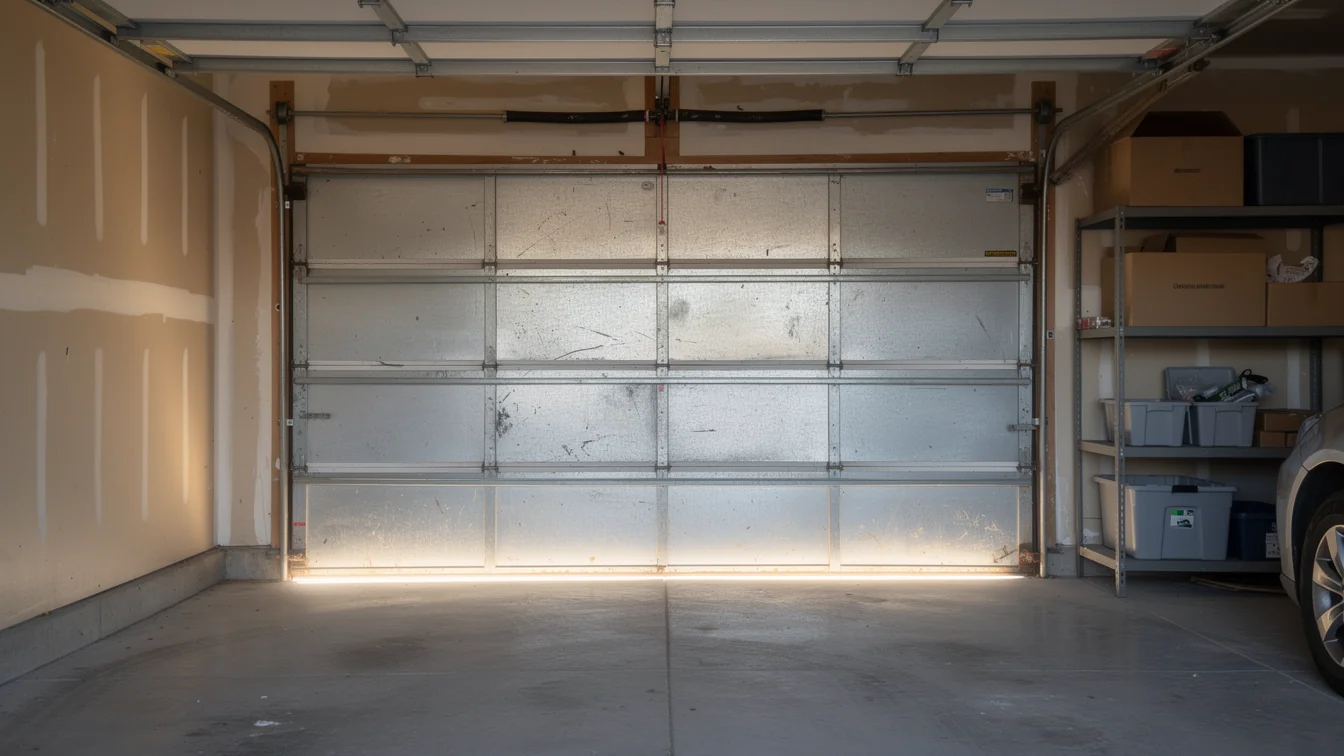
Wake Forest's housing stock runs from 1956 up through 2013, with the median build year sitting at 1991 - right before insulated steel doors became the standard option instead of the upgrade. Across the twelve mapped neighborhoods here, most of the garage doors date to the 1980s and 90s, which means a single layer of steel with no polystyrene or polyurethane core behind it. That matters because Wake Forest sits in a cold-moderate climate band. It's not the brutal winters you get further north, but it's enough cold air, over enough weeks, that a door with no thermal break lets that air sit right against the drywall separating the garage from the house. Owners notice it as a cold wall in the room next to the garage, or as frost forming on the inside face of the panel on the coldest mornings. None of this is a defect. It's just what an uninsulated steel panel does when it's doing exactly what it was built to do in 1988 - keep rain and wind out, nothing more. The insulation expectation came later, and a lot of these doors predate it by a decade or two.
When It Stops Being a DIY Job
A homeowner can hang a weatherstrip kit on the bottom seal and call it done, and for a lot of these houses that's the right move - cheap, fast, and it closes the biggest gap. Where it stops being a weekend project is when the panel itself has started to flex or dent from age, because at that point you're not sealing a gap, you're trying to insulate a door that's also failing structurally. With 14,339 owner-occupied houses in this service area, a lot of them built in that same pre-insulation-code window, we see the same pattern over and over: someone tries to retrofit foam board into a thin steel panel that's already bowed, and it either won't sit flush or it adds enough weight that the opener starts straining. If the door is original to a house from the 1950s or 60s end of the range, foam-and-tape retrofits are usually a patch, not a fix - the honest answer at that point is pricing out a replacement panel set rather than fighting the one you have. We'll tell you straight if that's where you are instead of selling you a kit that won't hold.
What to Check
Start at the bottom seal - on a door from the 80s or 90s it's often the original vinyl, cracked and shrunk, and that alone accounts for a surprising amount of the cold air people feel. Next, press on a panel section with your palm. If it flexes more than a little, there's no core material in there, confirming what the build year already tells you. Check the gap between the top panel and the header; older tracks were set with less tolerance for a thick insulated door, so if a previous owner ever swapped panels, mismatched thickness shows up there first. Look at the weatherstripping on the sides of the frame too, not just the floor seal - at a median household income of $68,485, most owners here get more value out of replacing all three seals as a set than swapping just the one that looks worst. Last, check for daylight around the window inserts if the door has them; older insert frames were never gasketed for an insulated door and leak independently of the panel itself.
What Is Going On
None of this is damage in the usual sense. It's a door built to a standard that existed before insulation was part of the standard, still doing the job it was built for. Wake Forest's build years cluster in the 80s and 90s across most of the mapped areas, right in the window when steel doors were common but the insulated-core option was still a line item you paid extra for, not a default. Builders in a cold-moderate climate didn't need to spec it, so most didn't. What changes now isn't the door - it's that energy costs and comfort expectations caught up to a product that was never designed to meet them. A new insulated door closes that gap outright. A retrofit on a sound existing panel can get partway there for less money. Which one makes sense depends on the shape the panel is already in, and that's worth an honest look before you spend on either one.
Frequently asked questions
Is my garage door supposed to have insulation?
Not necessarily - it depends on when it was built and what the original spec called for. Doors on Wake Forest houses from the 1980s and 90s were commonly built as single-layer steel with no insulation core, since that wasn't the default standard at the time. That's not a flaw, just the spec of the era.
Can I add insulation to an old garage door myself?
Often yes, with a foam board kit, if the panel itself is flat and sound. It stops being a good DIY job once the panel has started to flex or bow, because adding weight to a weakened panel can strain the opener and the foam won't sit flush anyway.
Why does my garage feel cold even with the door shut?
On a lot of older Wake Forest houses, the door panel has no insulation core and the bottom seal has shrunk with age. Combined with our cold-moderate winters, that lets cold air sit against the shared wall. Checking the seals first is usually the cheapest fix before considering a full door replacement.
Related garage door services in Wake Forest
More garage door guides
Book garage door service in Wake Forest
Call now or request a quote - tell us what the door is doing and where you are.