Wake Forest, NC · Garage Door Service
When a Spring Goes in Cold Weather
How Wake Forest's cold snaps and 1980s-90s garage door stock combine to snap torsion springs, and what to check before you call for a repair.
- Repairs & new doors
- Springs & openers
- Serving 4 nearby communities
What Local Conditions Do
Wake Forest sits in a cold-moderate climate band, which means winter nights get cold enough to stiffen steel but not cold enough that anyone thinks to plan for it. A torsion spring that's wound tight loses flexibility as the temperature drops, and the metal fatigue that's been building for years finally gives on the coldest morning of the week. That's not bad luck - it's physics meeting a part that was already near the end of its cycle count.
Most of the housing stock in this area went up between 1956 and 2013, with the bulk of it dating to the 1980s and 90s across the twelve neighborhoods we work in. That matters because a door installed in, say, 1988 is carrying original or first-replacement springs that have seen thirty-plus winters of this same temperature swing. The spring doesn't fail because it's cold out today. It fails because today is the day the cold finally finds the weak link.
Houses built later in that range, into the 2000s and up to 2013, often have galvanized springs with a longer expected life, but they're not immune - they're just a few winters behind the older stock.
When It Stops Being a DIY Job
If a spring has broken - you'll know, because the door won't lift, or it drops unevenly, or you hear a bang from the garage before any of that - this is not a job to work around. A broken torsion spring on a cold morning means the other spring, if it's the same age, is carrying double the load it was built for and winding down fast toward the same failure. Opening the door by hand to get a car out is the one thing you can safely do. Trying to re-tension or replace the spring yourself is not, especially on a door that's been sitting in a 30s-degree garage all night, because the steel is less forgiving and the bars under tension don't give you a warning before they let go.
The honest limit here: if the door is original to a house built in the 1980s or earlier and the spring has gone, we're usually not just swapping one part. The opener, the cables, and the rollers are the same age and the same cold-fatigued, so a spring call on an older Wake Forest house often turns into a bigger conversation once we're looking at it in person.
What to Check
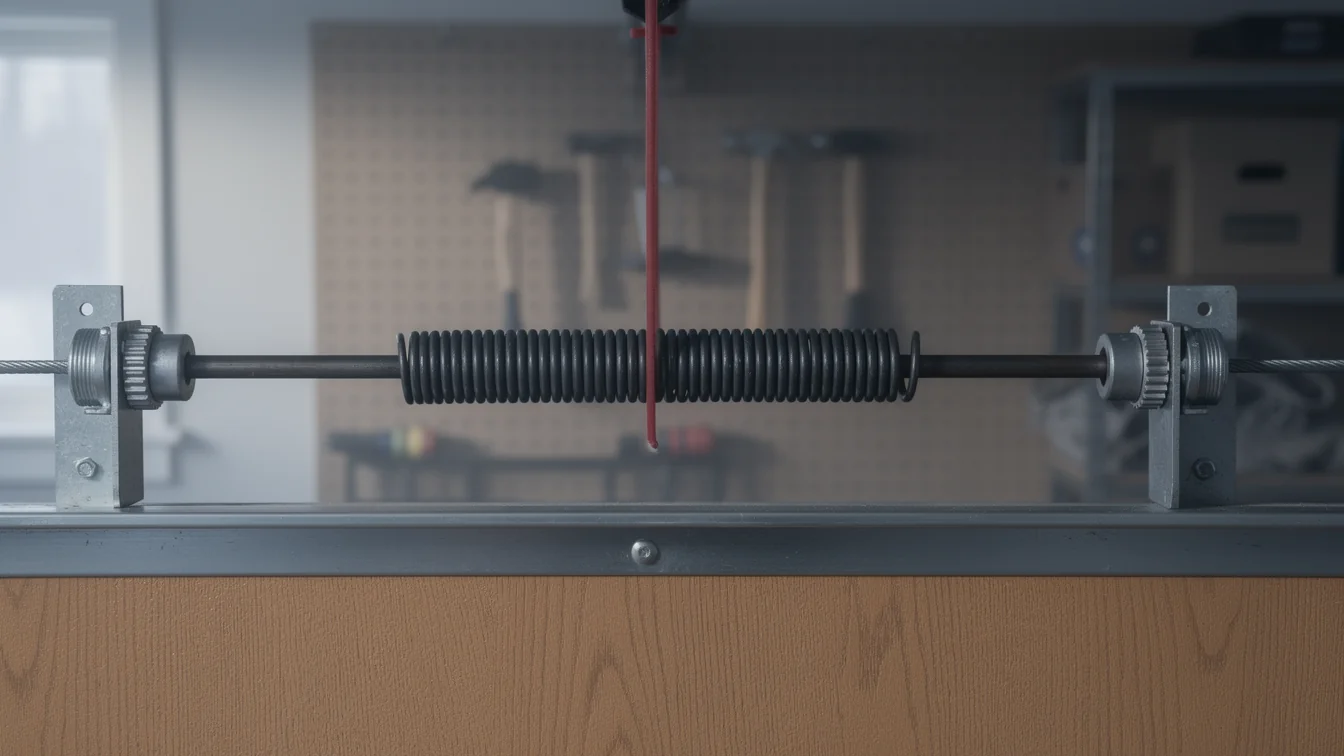
Before you call anyone, look at a few things from inside the garage, door closed, power to the opener off. First, the springs themselves - one or two coils above the center bracket, visible on either side of the door. A gap in the coil, or one spring looking noticeably looser than the other, means it's done. Second, the cables running down each side of the track. If a spring broke, the cable on that side is often slack or kinked at the bottom.
Third, check the date on your opener if you can find it, or just think about when the house was built or last had the door replaced. In a lot of the 1980s and 90s homes in this area, the opener and springs went in together and have never been touched since - that's the combination most likely to fail on a cold snap.
Don't try to lift the door past the point where it feels heavy or uneven. That resistance is the broken spring telling you the other one is doing all the work.
What Is Going On
Cold weather doesn't cause spring failure on its own - it exposes it. A spring rated for a given number of cycles degrades the same amount whether it's July or January, but steel contracts slightly as it cools, and a spring already near its fatigue limit loses just enough give to cross from strained to broken. That's why the call volume on this always clusters around the first hard cold mornings of the season rather than spreading evenly through the year.
In houses built across the 1980s and 90s stock common here, that first failure often lines up with springs that have never been replaced since the house was framed. Newer builds, closer to the 2013 end of the range, are usually a few winters further from that point, but the same cold-exposes-fatigue pattern will eventually reach them too. It's less about one bad morning and more about a part reaching the end of a long, slow decline that cold weather just happens to finish.
Frequently asked questions
Why did my spring break overnight when it was fine yesterday?
It likely wasn't fine - it was close to failing and the overnight cold was the push it needed. Steel loses a little flexibility as it cools, and a spring near the end of its fatigue life often lets go on the first genuinely cold night rather than during the day when temperatures are a bit higher.
Is this a Wake Forest-specific problem or does it happen everywhere?
The cold-moderate climate here means winters are cold enough to matter but not severe, so springs fail from accumulated fatigue meeting a cold morning rather than from extreme weather. Combined with a lot of 1980s and 90s housing stock still running original hardware, that combination shows up often in this area.
Can I just replace one spring if only one broke?
If both springs are the same age, which is common on original installs, the second one is usually close behind. We'd rather tell you that up front than have you pay for a second service call in a few months.
Related garage door services in Wake Forest
More garage door guides
Book garage door service in Wake Forest
Call now or request a quote - tell us what the door is doing and where you are.