
Wake Forest, NC · Garage Door Service
What That Noise From Your Garage Door Is Actually Telling You
Grinding, popping, or a loud bang from your garage door in Wake Forest usually traces back to 1980s-90s hardware and cold-season swings. Here's what each sound points to.
- Repairs & new doors
- Springs & openers
- Serving 4 nearby communities
What Local Conditions Do
Most of the garage doors we look at around Wake Forest sit on hardware installed somewhere between 1956 and 2013, with the bulk of the stock dating to the 1980s and 90s. That matters for noise because a 30-year-old torsion spring, a worn roller, or an opener gear set doesn't fail quietly. It announces itself first as a sound, weeks or months before it fails as a stuck door.
The cold-moderate climate here adds its own wear pattern. Winter nights bring real temperature swings, and steel contracts. Tracks that were bolted level in August can be a hair out of alignment by January, and a door that ran silent all summer starts clicking or popping on the first cold morning. Grease that was fine in July can stiffen enough in a 30-degree garage to make a roller grab instead of roll.
If your house falls into that common 1980s-90s band, especially out toward Rolesville or Youngsville, the springs and openers you're hearing are old enough that noise is often the first and only warning you get before something breaks.
When It Stops Being a DIY Job
A squeak you can lubricate yourself. A loud bang, a door that drops a few inches and stops, or a grinding sound from the spring area above the door is not something to open up on your own. A wound torsion spring holds enough stored tension to break a hand or worse, and on hardware this age - much of it original to houses built in that 1956-2013 window - the spring winding cones and center bracket have had decades to corrode or wear.
We draw the line here: if the noise is coming from the spring, the cable, or the center bearing plate, that's a call, not a project. If it's a roller squeal or a loose bracket bolt, that's fair game for a homeowner with a ladder and ten minutes.
One honest limit on our end: if a spring has already let go and the door is down, we can usually get out same day, but if the opener itself needs a specific gear kit for an older chain-drive unit, that part sometimes has to be ordered, and you're waiting on it rather than on us.
What to Check
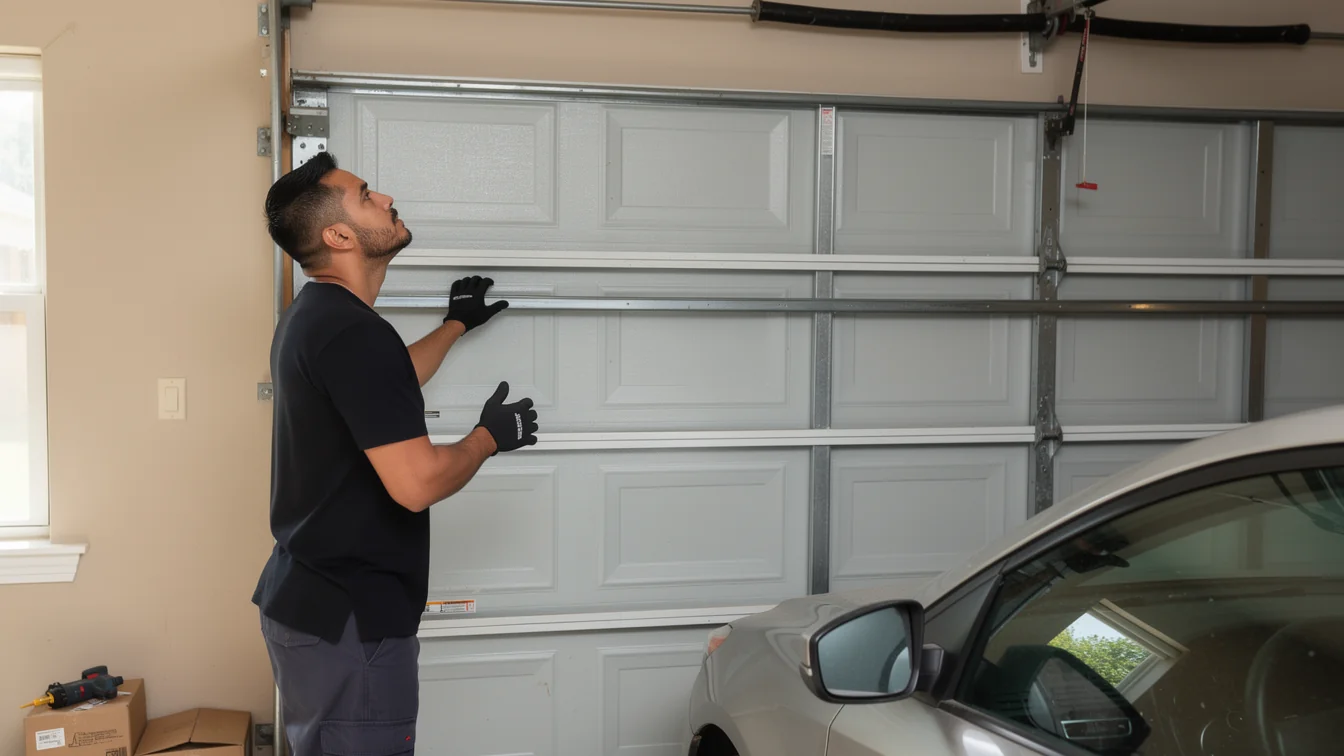
Before you call anyone, there are a few things worth checking yourself. Stand at the door and run it up and down once, listening for where the sound happens - at the bottom near the rollers, partway up near the track brackets, or right at the top near the spring and header bracket. Location tells you more than volume does.
Check whether the noise only happens on cold mornings. If it does, that's consistent with the seasonal contraction we see across the service area every winter, and it often means a track alignment check rather than a part replacement.
Look at the rollers themselves if you can see them. On a door from the 1980s or 90s stock common here, steel rollers without nylon bushings are a common original-equipment item, and they wear loud long before they wear out completely. A dry, metallic grinding at roller height is usually them, not the spring.
What Is Going On
A rhythmic thump every few feet as the door moves is almost always a roller hitting a worn spot in the track, not a structural problem. A single loud bang, especially if the door won't move afterward, is a broken spring - on houses with original hardware from the 1956-2013 build range, that's the single most common emergency call we get across the 12 areas we cover, from in close near Ammons Reservoir out to Hasentree.
A grinding whine from the motor unit itself, rather than the door, usually points to a worn gear inside an aging opener rather than anything with the door panels or track. A clicking that speeds up as the door nears the top is frequently a cable starting to fray at the drum, which is worth a look before it lets go entirely.
None of these sounds are cosmetic. Across a service area with over 14,000 owner-occupied houses and hardware that commonly runs 25 to 40 years old, the noise is the door telling you something specific, not just something old.
Frequently asked questions
Why does my garage door only make noise in cold weather?
Steel track and hardware contract slightly in cold temperatures, and with the cold-moderate winters we get here, that's enough to throw an otherwise fine track out of tight alignment. It often resolves with a track adjustment rather than new parts, especially on doors that run quiet all summer.
Is a loud bang from my garage door always a broken spring?
Not always, but it's the most common cause, especially on the 1980s-90s hardware that makes up a lot of the housing stock here. If the door won't move after the bang, treat it as a broken torsion spring and stay clear of it until someone with the right bars can release the tension safely.
My opener is grinding but the door still opens. Is that urgent?
It's not an emergency in the way a broken spring is, but a grinding opener gear set usually gets worse, not better. On an older chain-drive unit, the replacement gear kit sometimes has to be ordered, so it's worth having it looked at before it quits during a cold snap.
Related garage door services in Wake Forest
More garage door guides
Book garage door service in Wake Forest
Call now or request a quote - tell us what the door is doing and where you are.