Wake Forest, NC · Garage Door Service
What a Service Call Actually Covers
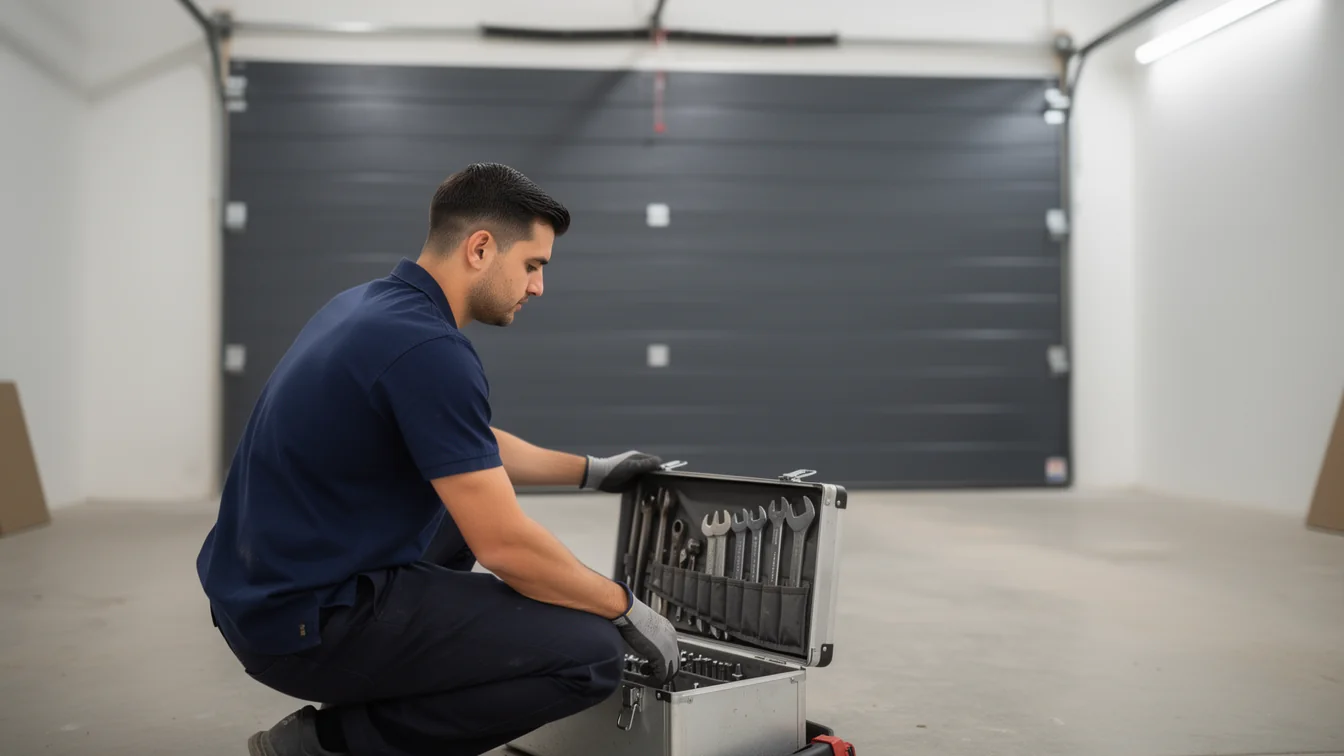
A look at what our techs actually check on a Wake Forest service call, tied to the area's 1956-2013 housing stock and cold-moderate winters.
- Repairs & new doors
- Springs & openers
- Serving 4 nearby communities
What Local Conditions Do
Wake Forest sits in a cold-moderate climate band, which means your garage door hardware goes through real freeze-thaw cycles every winter, not just a few cold snaps. Steel torsion springs lose tension faster when metal contracts and expands repeatedly, and the grease in older bearings gums up in the cold snaps we get here. Across the service area, homes were built anywhere from 1956 to 2013, with most of the stock dating to the 1980s and 90s across the twelve named areas we work in. That matters because a door installed in 1991 has had three decades of this freeze-thaw pattern working on its springs, hinges, and track alignment. A door from a 2010s build has newer galvanized hardware that handles the swings better, at least for now. On a service call, we're not just looking at what's broken today. We're looking at where that specific door sits in its hardware's weather-fatigue life, because a 1988 house and a 2008 house need different attention even if the symptom looks the same.
When It Stops Being a DIY Job
If your door is making noise but still opens and closes smoothly, that's often a roller or hinge lubrication job you can do yourself. Where it stops being DIY: once a torsion spring shows a visible gap in its coils, or the door comes down unevenly on one side. Springs are wound under enough tension to break bones, and on older homes in our area - the ones built before the 1990s became the dominant stock here - the spring and the mounting hardware around it have often never been replaced. We won't sugarcoat this one: if you're not sure whether a spring is original to a house built decades ago, don't test it yourself. The other line we draw is anything involving the torsion bar or cable drums. Those jobs call for the right winding bars and a second set of hands, which is exactly what a service call is for.
What to Check
Before you call, there's a short list worth looking at. Check the weatherstripping along the bottom of the door - in our cold-moderate climate, a gap there lets in enough cold air to matter on a 1980s or 90s house without updated insulation. Check whether the door reverses when it hits an object; federal safety standards require this and if it doesn't, that's a call, not a DIY fix. Look at the tracks for rust or bent sections, more common on houses built before the 1990s that have had decades of seasonal moisture. Check the balance: disconnect the opener, lift the door halfway by hand, and see if it holds. If it drops or shoots up, the spring tension is off. None of this requires tools beyond a flashlight and your own hands, and it tells us a lot before we even get to your house in Wake Forest.
What Is Going On
Most calls we get break down into a handful of patterns tied to the age of the house. On the older end of the stock - homes going back toward 1956 - we see original hardware that was never upgraded: single-strand cables, undersized springs for the door weight, openers with no safety reversal at all. On houses from the 1980s and 90s, which make up most of what's out there across the twelve areas we cover, the common issue is wear: springs rated for 10,000 cycles that hit that number a while ago, nylon rollers that have gone brittle from years of cold-weather contraction. Newer builds, closer to the 2013 end of the range, tend to have failures that are more about a bad part than age - a cheap opener gear or a misaligned sensor. We'll tell you straight if a repair isn't worth it compared to replacement; on a door old enough that parts are hard to source, that's sometimes the honest answer, and we won't talk you into a repair just to avoid saying so.
Frequently asked questions
How often should I have my garage door serviced in Wake Forest?
We don't have a blanket interval that fits every house. What we can tell you is that the area's cold-moderate winters put real stress on spring tension and roller hardware, so if your house was built before the 1990s and you can't remember the last time anyone looked at the springs, that's worth a call.
Why does my door act up more in winter?
Cold contracts metal. Springs and torsion bars tighten slightly, bearings stiffen, and any hardware that was already worn shows it first in cold weather. This is a direct result of our cold-moderate climate band, not something unique to your door.
Is it worth replacing an old opener instead of repairing it?
Depends on the age and the failure. If the opener predates modern safety-reversal requirements, we'll tell you that outright. On houses toward the older end of the 1956-2013 range here, replacement is often the more honest answer than chasing parts for a discontinued unit.
Can I just tighten the springs myself if the door is sagging?
No. Torsion springs hold enough stored tension to cause serious injury, and on older homes in this area the mounting hardware around the spring may also be original and fatigued. This is one of the clearest lines between what you can check yourself and what needs a call.
Related garage door services in Wake Forest
More garage door guides
Book garage door service in Wake Forest
Call now or request a quote - tell us what the door is doing and where you are.